






















 Reviews
 My Account
 Contact Us
 Help
Help
Why Do Dogs Sleep So Much? Understanding Your Dog’s Sleeping Habits
Oh, the joy of a mid-afternoon nap. Just enough rest to help you feel refreshed for the rest of the day. It sounds amazing, right? If only getting a nap in every day were realistic for all of us. It’s enough to make us a little jealous of dogs. After all, they seem perfectly content to nap the day away and sleep through the night, too.
But how much sleep is normal for a dog? And how do you know if Fido is sleeping too much? We’ve got some answers to the question: why do dogs sleep so much? And who knows? Maybe we’ll even learn a thing or two from our furry friends along the way.
Quick Answer: Why Do Dogs Sleep So Much?
Dogs sleep so much because their bodies and brains need more rest than ours do. Most adult dogs sleep about 12 to 16 hours in a 24-hour period, although the exact amount can vary based on age, breed, activity level, health, and daily routine. Puppies may sleep as much as 18 to 20 hours per day because their bodies are growing quickly and their brains are constantly processing new sights, sounds, smells, and lessons.
So, if your dog spends much of the day napping, that doesn’t necessarily mean anything is wrong. What matters most is whether their sleeping habits are typical for them and whether they still wake up ready to eat, play, walk, and interact with you.
How Many Hours a Day Should a Dog Sleep?
Humans are designed to get by on seven to ten hours of sleep per day, most of which happens at night. Of course, human babies tend to sleep more, averaging about 14 to 17 hours of sleep per night. But what about dogs? Why do they need so much more sleep than we do? And why do puppies need more sleep than a growing baby? These are all great questions.
Here’s what we understand about dogs and sleep. Most adult dogs sleep about 12 to 16 hours in a 24-hour period, while puppies may sleep as much as 18 to 20 hours. Puppies need that extra rest to support rapid growth, development, and all the learning that happens during those early months.
If you’ve ever thought, “my dog sleeps all day,” it may certainly feel that way. But dogs usually spread their sleep across nighttime rest and multiple daytime naps. They may also wake frequently for food, play, bathroom breaks, walks, or simply to follow you from room to room. Add up those shorter wakeful periods, and your dog may be spending more time awake than you realize.
Why Does Your Dog Spend So Much Time Sleeping?
So this begs the question, but why? And of course, we mean, why does my dog sleep so much? If your favorite furry companion is sleeping as much as 16 hours per day, that means they’re only roaming around and enjoying life eight hours a day. That’s completely opposite to how humans approach (and require) sleep.
Dogs Naturally Sleep Differently Than People
Unlike humans, dogs tend to sleep in shorter stretches throughout the day and wake more easily. REM sleep typically begins about 20 minutes into a nap and may last just two to three minutes. During this stage, you might notice twitching paws, tiny movements, or little sounds that can leave you wondering what dogs dream about.
Physical and Mental Activity Can Make Them Tired
Walks, running, playing, training, sniffing around the neighborhood, and meeting new people or animals all use physical and mental energy. After an active or stimulating day, your dog may naturally need more sleep to recover. Even a long training session or an afternoon filled with new smells can leave Fido ready for a serious nap.
Sometimes Dogs Sleep Because There Isn’t Much Else Going On
Sometimes, dogs nap simply because the house is quiet and not much is happening. If they have a comfortable dog living space where they feel safe and relaxed, falling asleep may come easily. An afternoon snooze doesn’t automatically signal boredom or a problem, especially if your dog perks up for meals, walks, play, and attention.
What Determines How Much Sleep Your Dog Gets?
If you’ve noticed your dog sleeping a lot, you probably wonder how that compares to other dogs. After all, why does one dog sleep 16 hours a day, and another, maybe even the same breed, sleeps only 12?
The truth is that there are some pretty reasonable explanations for those differences. Let’s take a look at some of the factors that go into how much your dog snoozes each day.
-
Age. Puppies need lots of sleep to support growth and development, while older dogs often start snoozing more again. Most geriatric dogs need about 12 to 15 hours of sleep each day as their energy levels and activity patterns change.
-
Breed and size. Larger dogs generally need more sleep than smaller dogs because moving a bigger body requires more energy. Giant breeds such as Mastiffs, Newfoundlands, and Great Danes are especially well known for lounging and may sleep as much as 18 to 20 hours a day.
-
Activity and routine. A long walk, training session, afternoon of play, or busy day with the family can leave your dog ready for extra rest. Dogs with quieter daily routines may also spend more time napping simply because there is less activity competing for their attention.
-
Changes at home. Visitors, travel, moving, a new pet, or even a change in your work schedule can temporarily affect your dog’s sleep. Pay attention to their other behaviors, including familiar ways dogs show affection, to get a fuller picture of how they’re adjusting.
My Dog Sleeps All Day. When Should I Be Concerned?
Even though dogs do sleep a lot, sometimes there are reasons to be rightfully concerned. First, however, it's important to understand the difference between sleepiness and lethargy. Think about things from your own perspective. Sometimes you’re just tired. You’ve had a long week at work. You’re just getting back from jet-setting on a fun-filled vacation. Or maybe you’re recovering from an injury. These are all classic signs that your body just needs sleep.
Lethargy is different. It goes beyond simple tiredness and may involve unusual sluggishness, lack of interest, and decreased physical or mental activity that can point to an underlying health problem.
So, if you think, “Hey, my dog sleeps a lot,” and you want to know whether you should be concerned, here’s what to watch for.
-
A sudden increase in how much your dog sleeps
-
Less interest in food, treats, walks, or play
-
Difficulty waking your dog or getting their attention
-
Weakness, wobbliness, or trouble standing or walking
-
Vomiting, diarrhea, or changes in bathroom habits
-
Unusual breathing, coughing, or excessive panting
-
Signs of pain, such as whining, limping, or avoiding touch
-
Changes in personality, including withdrawal or confusion
A dog that sleeps often is not automatically cause for concern. What matters most is whether the extra sleep is new for your dog or comes with other changes in behavior, appetite, movement, or overall alertness.
How Can You Help Your Dog Get Better Sleep
We all know how important sleep quality is. If we have a poor night’s sleep, it can lead to a pretty rotten day. And when we slumber away peacefully for at least eight hours a night, we tend to wake up refreshed and ready to take on the world.
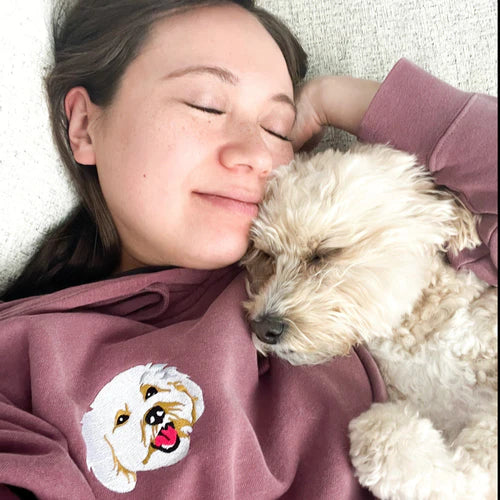
For dogs, sleep quality matters, too. If your dog’s sleep is constantly interrupted, or if sleep is withheld, chances are your pet will be irritable and troublesome. But if you provide a safe and peaceful environment for them to snore away hours of the day, you’re more likely to have a pup who is ready for that walk after work or those snuggles on the couch underneath a watercolor pet portrait of their handsome little self.
Here’s how you can help your pet get the snoozes that they deserve.
-
Give your dog a quiet, comfortable place to sleep away from heavy household traffic.
-
Keep meals, walks, playtime, and bedtime on a fairly predictable schedule.
-
Provide enough daily exercise based on your dog’s age, breed, and health.
-
Include mental stimulation through training, sniffing, puzzle toys, and play.
-
Let puppies and senior dogs get the extra rest their bodies may need.
-
Avoid waking your dog repeatedly just because they happen to be napping during the day.
-
Keep their sleeping area clean, comfortable, and at a temperature that helps them settle in.
Your Dog’s Sleep Habits Tell Their Own Story
If you are concerned about your dog’s sleep habits, never hesitate to reach out to your veterinarian. Your dog’s vet is best equipped to answer any questions you might have about what’s normal and what you should expect from your canine companion. And if your pup needs a bit of help sleeping at night, pay attention to recent pet industry trends. New products are introduced to the market all the time, and one of them might help your pet get better rest.
The important thing to know is this: if your pet is in generally good spirits, is eating, drinking, and pooing normally, then things are most likely just fine. Let your dog guide you in what’s right for them, and then celebrate your pup and all of their uniqueness, including their ability to lounge and snooze the day away.
Lastly, don’t forget to check out our pet portraits. You might even capture the perfect photo of your pet asleep and want to hang it on the wall!
Frequently Asked Questions
1. Is it normal for my dog to sleep most of the day?
Yes, it can be normal for a dog to sleep for much of the day, especially if they still wake up readily for meals, walks, play, and attention. Most adult dogs sleep about 12 to 16 hours per day.
2. Do dogs sleep more as they get older?
Yes, many dogs sleep more as they age because they tire more easily and may need additional recovery time. Senior dogs may sleep around 12 to 15 hours per day.
3. When should I worry about my dog sleeping too much?
You should be more concerned if your dog suddenly starts sleeping much more than usual or shows other symptoms such as weakness, appetite changes, vomiting, pain, confusion, or difficulty waking.
